The scenario
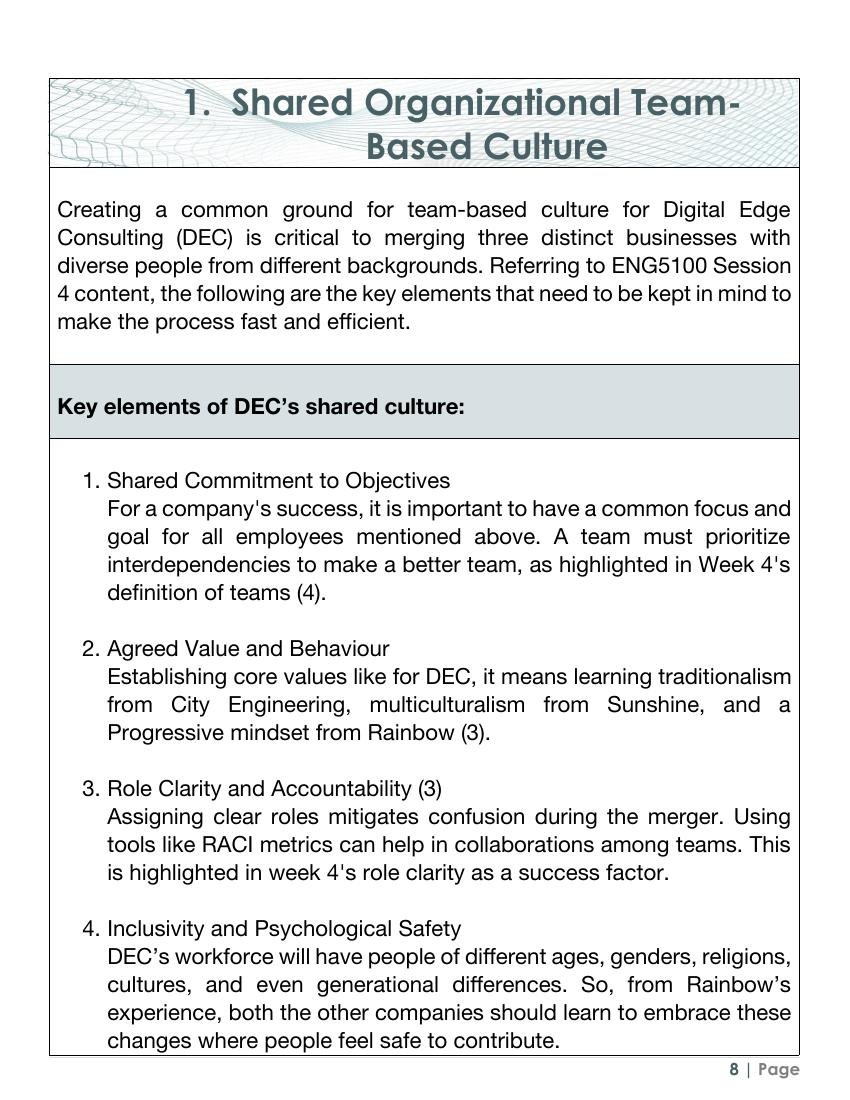
Three engineering firms — a city-based practice, a Sunshine-based immigrant-staffed firm, and Rainbow Engineering — merge to form Digital Edge Consulting (DEC). As the newly formed transition team, the brief called for a written report to DEC's Executive covering a Strategic Thinking Flowchart, key issues to address, a Teams & Leadership analysis, a Staff Engagement Plan, an EDI strategy, Hybrid Work Guidelines, and a Client Engagement Plan — plus a team-delivered video presentation.
Strategic thinking flowchart
Mapped DEC's cultural integration issues, resistance to Digital Engineering adoption, cross-location team risks, and potential client dissatisfaction into a structured decision flow to guide the rest of the transition plan.
Hybrid work model
Weighed the benefits — productivity, work-life balance, reduced overhead — against DEC-specific risks: employee isolation, language barriers across the merged firms, and split collaboration modes. Recommendations were tailored to DEC's actual situation, including accommodations for staff with disabilities.
EDI strategy
Built a value-led, action-oriented framework covering representation tracking across hiring and promotion, psychological safety, zero-tolerance for discrimination with anonymous reporting, inclusive and servant leadership training, and a rotating team-level EDI ambassador model.
Mindfulness & leadership
Addressed the impact of digital-era distraction — referencing average human attention spans of roughly 8 seconds and a 40% productivity loss from multitasking — with a proposed Mindfulness-Based Stress Reduction (MBSR) program, situational leadership coaching, and email-free work blocks.
Frameworks applied
Referenced course frameworks throughout, including Maslow's hierarchy, the ADDIE training model, and the Situational Leadership Model — each applied specifically to DEC's merger context rather than generically restated.
Tools & skills
- Strategic and critical thinking frameworks
- Organisational psychology and leadership theory
- Business report writing · Harvard referencing
- Team-based collaborative writing and video presentation delivery